
The Bottom Line: Where AI Actually Helps
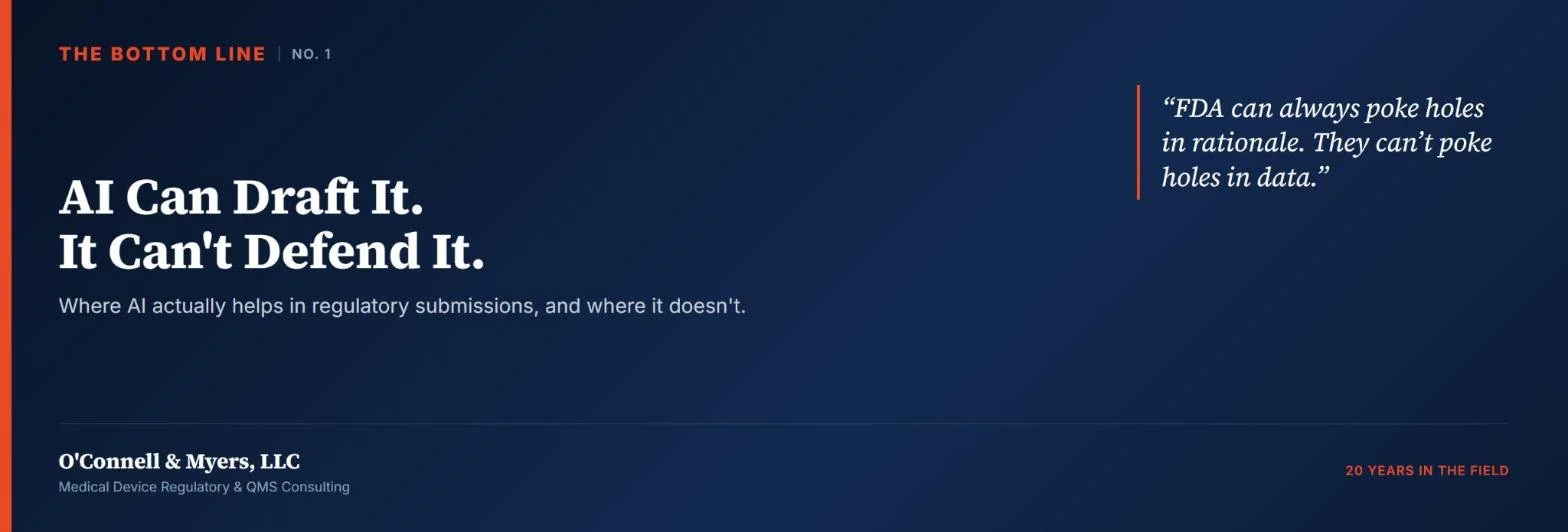
Bottom line: AI can help you write a regulatory submission. It can't tell you if it's right.
I've had a few clients ask this year if they can just have AI draft their 510(k). Honest answer: for a first pass, sure. AI's good at structure. It'll get your document organized, catch obvious formatting gaps, and save you hours you'd otherwise spend staring at a blank template.
What it can't do is sit in the reviewer's chair.
That's the actual skill. Not writing the words, but knowing what an FDA reviewer is going to ask about them. Where the gaps in your rationale are. What data is missing. Whether your predicate actually holds up.
Think of AI like a smart intern. Fast, tireless, great at a first draft. But you still need someone who's read a hundred of these to catch what's missing, because FDA can always poke holes in rationale. They can't poke holes in data.
So here's how I actually tell clients to use it: let AI help you get oriented and get a draft moving. Then get a second set of experienced eyes on it before anything goes to FDA. That's not me selling you something. That's just how good submissions get made.
Drafting your own submission and want it checked before FDA sees it? Book a free 30-minute call and we'll talk through where you are.
Trey Thorsen, O'Connell & Myers, LLC. 20 years in medical device regulatory affairs. This post is part of The Bottom Line, a series I also share on LinkedIn.